Buyers moving through escrow on an older Fullerton home often assume that somewhere in the stack of reports, someone has already looked at the pipe running from the house to the street. In parts of the Bay Area, that assumption would be correct. In Fullerton, it is not. The city has no ordinance that requires a sewer lateral inspection before a title transfers, no compliance certificate, and no escrow holdback tied to plumbing condition. The responsibility for knowing what is underground sits entirely with whoever is buying the house, and that gap matters more in some Fullerton neighborhoods than others.
What the City Actually Requires, and What It Doesn't
Fullerton's municipal code addresses lateral sewers in a single, narrow provision. Under Section 12.08.031, the line running from a building to its connection with the main sewer is the property owner's responsibility to maintain, repair, and keep up. The city may step in and do work within the public right-of-way only if doing so limits the city's own liability. Nothing in that section, or anywhere else in the sewer chapter of the code, ties a sale, a title transfer, or a change of ownership to an inspection requirement.
That is a real design choice, not an oversight. Several California cities and water districts run the opposite system. South San Francisco requires a licensed contractor's CCTV video of the sewer lateral before a sale closes, and if the certificate of compliance can't be obtained in time, the buyer or seller has to post a $10,500 deposit into an escrow account to buy 180 days for repairs. The East Bay Municipal Utility District runs a comparable regional program for the communities it serves, with its own compliance certificate and refundable deposit. Those cities decided the informational burden of an aging sewer line should be resolved before anyone signs closing documents.
Fullerton decided the opposite. Nothing forces the question to surface during a transaction, which means it only surfaces if the buyer or their inspector asks it.
The City's Free Program Solves a Different Problem
Fullerton does offer residents something useful here, and it is worth understanding exactly what it covers, because it is easy to mistake it for a substitute. The Sewer Lateral Maintenance Program, run through Public Works, sends a city crew to video-inspect a lateral at no charge when a resident suspects root intrusion. To qualify, the property needs an existing 4-inch sweep-type cleanout at the front, and the city needs to confirm there are no private trees near the line causing the problem, since that shifts the issue to a private tree dispute rather than a public infrastructure one.
That program answers a maintenance question for a current owner who is already having backups. It was never built to answer a purchase question for someone who has thirty days to decide whether to buy the house. It doesn't run automatically when a listing goes live, it doesn't produce a report a lender or title company will accept as proof of condition, and it doesn't cover the portion of the lateral inside the property line, which is exactly the stretch most likely to have problems in an older home. A buyer who assumes this program has already looked at the line, because the city offers something with "inspection" in the name, is assuming something the program was never designed to deliver.
Three Plumbing Generations Inside a Few Square Miles
The other reason this gap matters more here than in a newer suburb is that Fullerton's housing stock spans nearly a century within a compact footprint. A buyer touring three open houses in one afternoon can move through three distinct plumbing eras without realizing it.
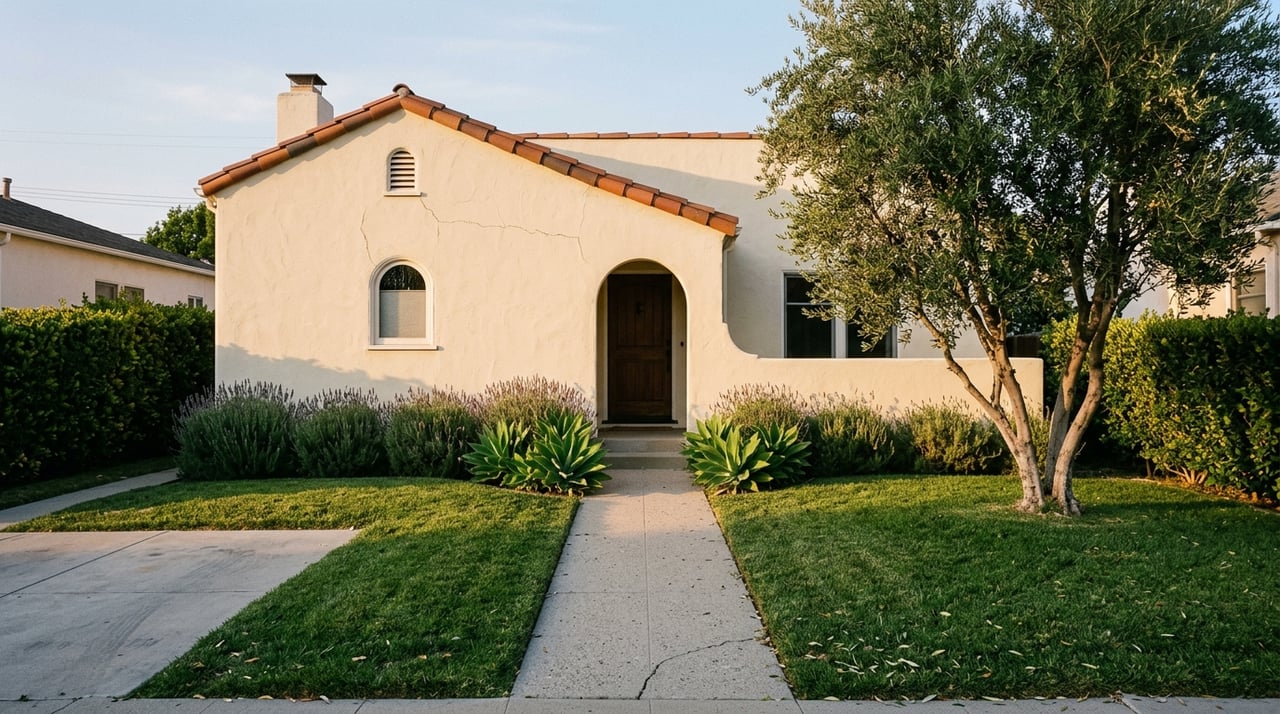
Downtown Fullerton and the historic pocket north of it, sometimes called Golden Flats, hold some of the oldest homes in northern Orange County: Craftsman bungalows and California bungalows dating to the 1910s through the 1930s. Original galvanized steel supply lines and cast iron drain stacks are still in service in a meaningful share of these houses. Some sit inside a protected historic overlay, rarely come up for sale, and when they do, they trade well above a million dollars. A high price tag doesn't tell you anything about what's inside the walls behind the restored kitchen.
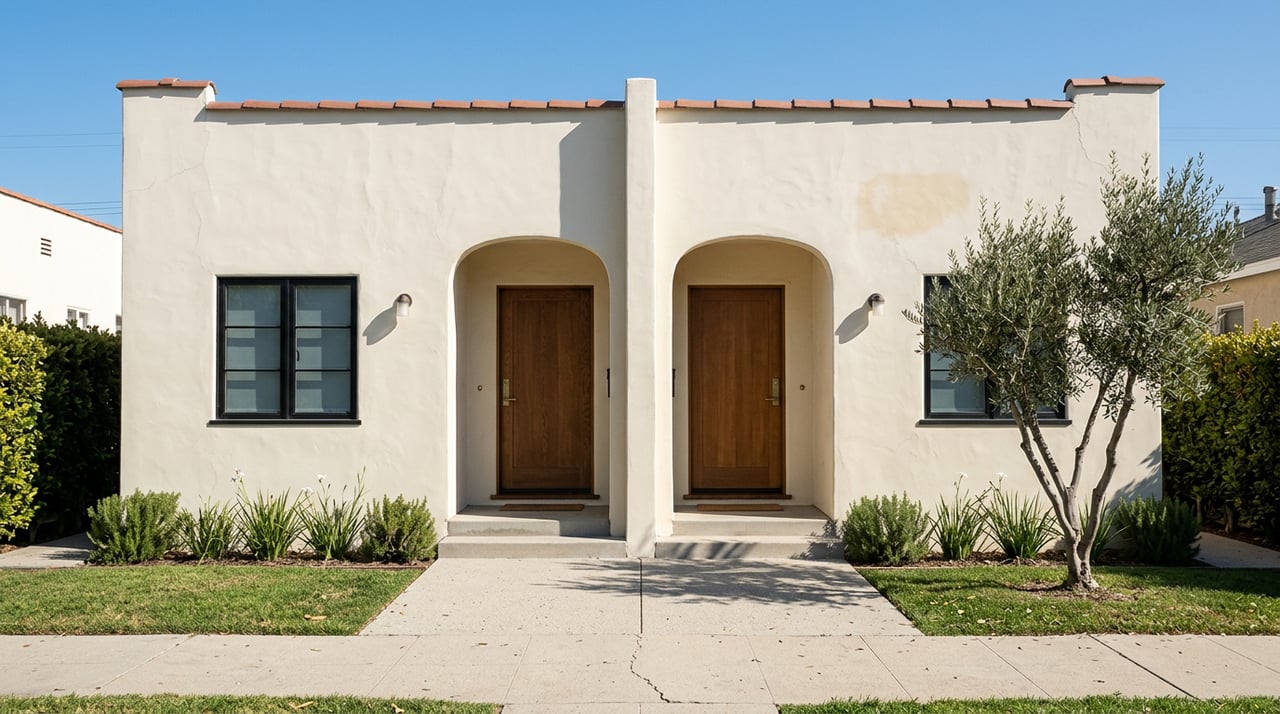
Sunny Hills developed heavily through the 1940s into the 1960s, squarely during the period when builders across Southern California were transitioning from galvanized steel to copper. Many of these homes ended up with both materials in the same system, and the joints where the two metals meet corrode faster than either material would on its own. The same transition-era mix shows up in the mid-century tracts near Cal State Fullerton, which raises the stakes for anyone eyeing a small multi-unit property in that area. A duplex or triplex built in that window may have a single shared lateral serving multiple units, which turns a plumbing problem into a shared-cost problem the moment a tenant reports a slow drain.
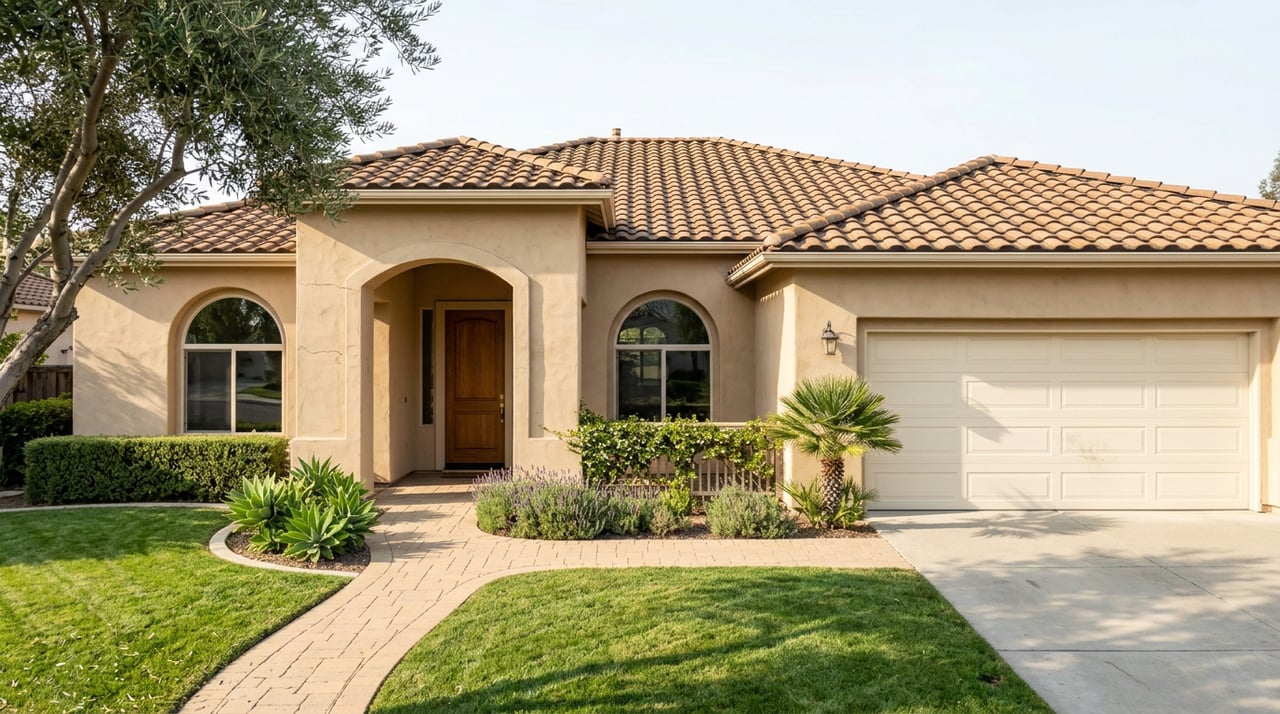
Amerige Heights, built out mostly in the 1990s and 2000s, sits at the other end of the spectrum, with PEX supply lines and modern drain materials that carry a lower risk profile by comparison.
| Area | Typical Build Era | Common Original Materials | What to Ask For |
|---|---|---|---|
| Golden Flats and the Downtown historic core | 1910s to 1930s | Galvanized steel supply, cast iron drains | A full CCTV sewer scope and a supply-line pressure check, especially with mature street trees nearby |
| Sunny Hills | 1940s to 1960s | Mixed galvanized-to-copper transition, cast iron drains | Ask specifically about joint corrosion and request any prior pressure-test results |
| Cal State Fullerton-area mid-century tracts | 1950s to 1960s | Same transition-era mixed metals | Investors should confirm whether the lateral is shared across units before finalizing an offer |
| Amerige Heights | 1990s to 2000s | PEX supply, modern drain materials | Lower baseline risk, but verify any additions or ADUs match the original system |
None of this means an older home has a bad system, and it doesn't mean a newer one is automatically clean. It means the build era tells you which questions are worth asking, and in Fullerton, the build era changes block by block far more than it does in a city built out in a single decade.
What a Standard Inspection Leaves Out
A general home inspection is built to evaluate what an inspector can see and reach: fixtures, visible pipe runs, water heaters, accessible drain lines. The sewer lateral runs underground from the house to the city main, which puts almost the entire length of it outside the scope of a standard walkthrough. That's not a flaw in the inspection process, it's a structural limit of what a visual inspection can do. Galvanized supply lines carry the same blind spot from a different direction: they can look intact from the outside while corrosion has already narrowed the interior diameter, and a pressure drop won't always show up during a short test.
A private CCTV sewer scope closes that gap for the lateral. It's a smaller, standalone line item compared to a full repipe, and ordering one during the inspection contingency period means the buyer gets to see the actual condition of the line before removing contingencies, not after. A full whole-home repipe, if one turns out to be needed, is a bigger commitment, running anywhere from several thousand dollars into five figures depending on the home's size and how accessible the walls are.
Before Removing Contingencies
- Ask whether any part of the plumbing has been repiped, and request the permit record if so. Unpermitted plumbing work can complicate both resale disclosure and insurance claims later.
- Order a sewer scope separately from the general inspection if the home was built before the 1970s, since the standard report won't include it.
- For a multi-unit property, confirm whether the lateral is shared across units before finalizing price or repair credits.
- Don't treat the city's free root-inspection program as a pre-purchase substitute. It's a maintenance tool for current owners, not a transaction tool for buyers.
None of this is about walking away from a Fullerton home because it's older. Some of the city's most solid, best-built houses are the ones with a century of history behind them. It's about knowing that the city isn't going to surface this information for you, which means the burden, and the leverage that comes with acting on it early, both sit with the buyer.
If you're comparing a Golden Hills bungalow against a Sunny Hills tract home or a newer place in Amerige Heights, and you want a clearer read on what each one's plumbing history is likely to look like before you write an offer, Elizabeth Sanchez and her team work Fullerton regularly and can help you build the right inspection contingency into your offer from the start. Schedule your free consultation to talk through what to ask for before you're in escrow, not after.