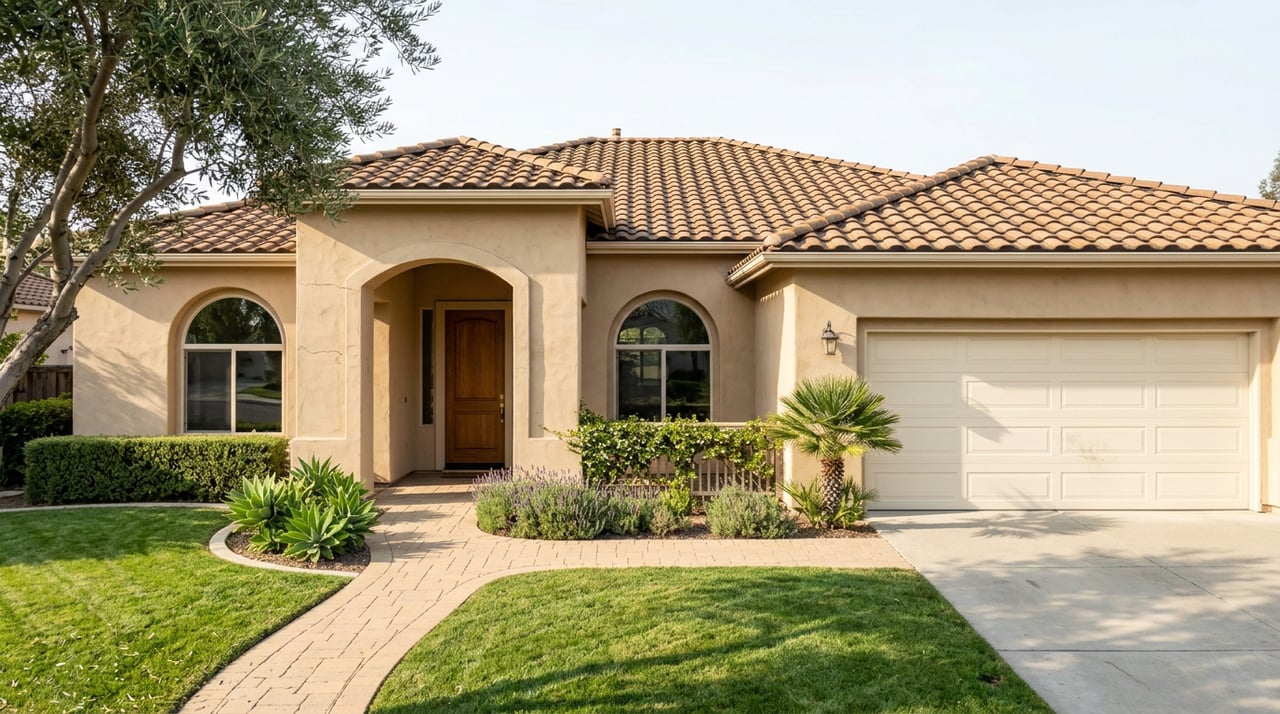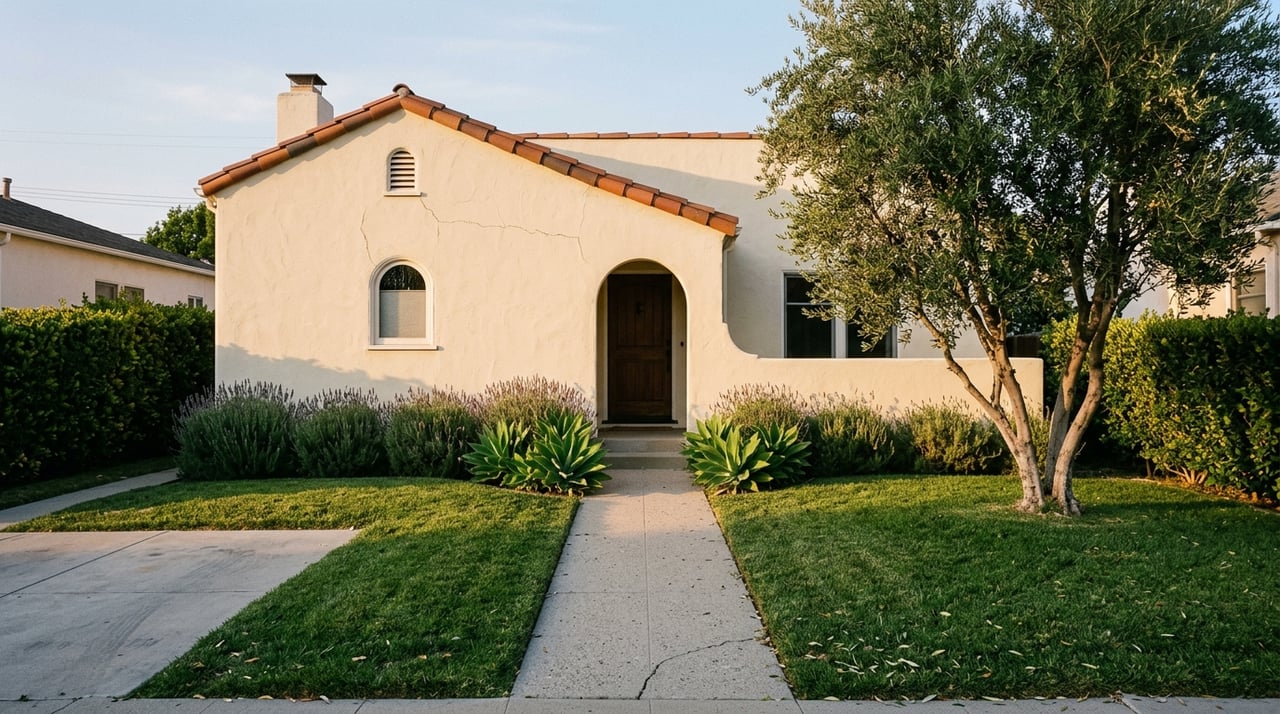
You're touring a 1928 Spanish Colonial Revival on Eucalyptus Avenue in Wrigley, or a California Bungalow in California Heights, and the listing remarks mention a Mills Act contract already in place. The agent says something like "buyer gets the tax savings too." It sounds like a fixed discount baked into the house, something that rides along with the deed the way a solar lease or an HOA fee does. It isn't. The contract transfers. The tax benefit gets recalculated from scratch, using your purchase price, the year you close, and a formula most buyers never see until the first tax bill arrives.
That gap between what people assume and what actually happens is where offers get written on faulty math.
The Contract Transfers. The Number Doesn't.
Under a Mills Act agreement, a property owner commits to restoring and maintaining a designated historic home for a minimum 10-year term in exchange for a property tax reduction. Long Beach has run this program since 1993, and the contract itself runs with the land. When a Mills Act property sells, the new owner is bound by the same preservation obligations the seller signed up for, and the seller is required to disclose the contract, along with what work has been completed and what's still outstanding.
What doesn't carry over automatically is the dollar amount of the savings. The Los Angeles County Assessor doesn't lock in a discount percentage and hand it to whoever owns the house next. Every year, for every Mills Act property, the Assessor runs three separate valuations and taxes the property on whichever one comes out lowest.
Three Numbers, One Winner
Here's the comparison the Assessor actually runs:
| Valuation | What it reflects | When it wins |
|---|---|---|
| Prop 13 base year value | Your purchase price, escalated up to 2% a year | When you've owned the property a long time and the base year has stayed low |
| Current fair market value | What the home would sell for today | Rarely wins once a contract is in place, since it's usually the highest number |
| Mills Act income-capitalization value | A rental-income estimate based on three comparable rental properties, minus allowed expenses | When the property could support the contract but wouldn't otherwise get much benefit from Prop 13 alone |
The city calculates that income-capitalization number by pricing the home as if it were a rental, comparing it to similar properties, and subtracting maintenance costs to land on a base assessment. That figure is often lower than a recent sale price, which is exactly why the program exists. But it isn't automatically lower than everything else. It's just one of three inputs, and the lowest one wins.
Why Your Purchase Price Resets the Whole Calculation
Here's the part that actually matters for a buyer standing in front of a listing that already has a contract on it.
Every time a property changes hands in California, the county resets the Prop 13 base year to the new purchase price. That happens whether or not a Mills Act contract exists. So the moment you close on that Wrigley bungalow, your new base year value is whatever you paid, not whatever the seller's base year happened to be after years of 2% annual caps.
That reset is precisely why the city describes the Mills Act as especially useful for recent buyers or owners who've just gone through a transfer or reassessment. A fresh, high base year is far more likely to sit above the income-capitalization number, which means the Mills Act comparison actually produces savings for you. A seller who bought the same house decades ago, by contrast, may have a base year so low from years of capped increases that the income approach never beats it. Their contract exists on paper, but it isn't doing anything for their tax bill.
Long Beach's own program guidance makes this explicit: an owner who's held a property for more than 10 years is less likely to see any tax reduction under Mills Act, even with a substantial restoration plan, because their existing base year may already be the lowest of the three numbers. That's a strange thing to internalize as a buyer, because it means the same contract that produced zero savings for the person selling you the house could produce real savings for you, purely because you're paying today's price instead of a 1994 price.
The practical takeaway: don't evaluate a Mills Act listing based on what the seller has been paying. Ask what your purchase price does to the comparison, because that's the number that will actually show up on your first fall tax bill.
Additions and Renovation Plans Change the Math Too
If your plans for the property include a room addition, a garage conversion, or anything beyond exterior preservation, the calculation shifts again. New construction doesn't qualify for the historic treatment under a Mills Act contract. Instead, the market value of that new construction gets added on top of the restricted historic value, which can push your assessed value higher than you'd expect even with the contract intact. The Mills Act only preserves exterior character-defining features, not interior remodels, and it was never designed to subsidize square footage you're adding after the fact.
If you're buying with renovation plans already in mind, it's worth a conversation with the County Assessor's office before you finalize those plans, not after the addition is built.
Before You Write the Offer
If a Long Beach listing includes an active Mills Act contract, here's what actually needs verifying before that contract becomes part of your offer math, rather than just part of the marketing:
- Get a copy of the recorded contract and the current work plan, including what restoration items remain outstanding and their required completion timeline
- Ask when the property was last inspected. State law requires compliance checks every five years, and unresolved violations can put the contract at risk of cancellation
- Confirm there are no delinquent property taxes tied to the parcel, since that alone makes a property ineligible to remain in good standing
- Understand the notice periods. An owner can terminate with 90 days' notice before the annual renewal date, and the city can terminate with 60 days' notice, but neither side can exit during the initial 10-year term except in specific default situations
- Ask your lender directly how they'll treat the contract during underwriting. Most will want a copy of the recorded document and confirmation of your ongoing obligations
None of this is disqualifying information. It's the difference between assuming a number and confirming one.
What This Means If You're Looking at a Duplex or Triplex
Long Beach's Mills Act program isn't limited to single-family homes, and that matters if you're a small investor eyeing a historic multi-unit property instead of a primary residence. Eligibility runs by assessed value and property type: roughly $1,055,700 for single-family residences, $1,267,000 for duplexes, and $1,900,500 for triplexes. Buildings with four or more units are eligible regardless of assessed value, which opens the door for larger historic apartment properties that wouldn't otherwise qualify under those caps.
For anyone assembling a small portfolio in a $400,000 to $1,000,000 range, a historic duplex in a district like Drake Park/Willmore City or Carroll Park can carry real tax advantages once you're the one holding the fresh base year, provided the property still clears the eligibility bar and doesn't come with unresolved code issues.
Timing Matters Right Now
If you're hoping to apply for a new Mills Act contract yourself, rather than buying a property that already has one, timing is worth knowing. Long Beach's 2026 application window has already closed. The city's next cycle doesn't open until January 2027, and the process requires attending mandatory pre-application and application workshops before a submission is even accepted. That's a full-year runway to plan around if a property you're considering isn't yet under contract but looks like a strong candidate for one.
A Few Questions Worth Asking Directly
Does a Mills Act contract freeze my property taxes for the full 10 years? No. The contract is reassessed annually using the same three-value comparison, so your tax bill can move year to year depending on how the income-capitalization number, your base year, and current market value compare.
Can I end a Mills Act contract if I decide it's not worth the obligations? Yes, but not immediately. You'd need to notify the city in writing at least 90 days before an annual renewal date, and termination isn't available during the initial 10-year term except in default situations.
What if the historic home I want isn't already under a Mills Act contract? You can apply, but only during the annual window, and only if the property is individually designated, listed on a qualifying register, or a contributing structure within one of the city's historic districts. Code violations and delinquent taxes disqualify an application outright, and the next opportunity to apply is January 2027.
A historic home in one of Long Beach's 18 designated districts is still one of the more interesting buys in this market, and the tax mechanics behind it reward exactly the kind of buyer who does the arithmetic instead of taking the listing remarks at face value. If you're weighing a Mills Act property in Wrigley, California Heights, Rose Park, or anywhere else in Long Beach and want someone to walk through the actual numbers with you before you write an offer, Team Sanchez is glad to help. Schedule your free consultation and let's look at what your specific purchase price would actually do to that tax bill.