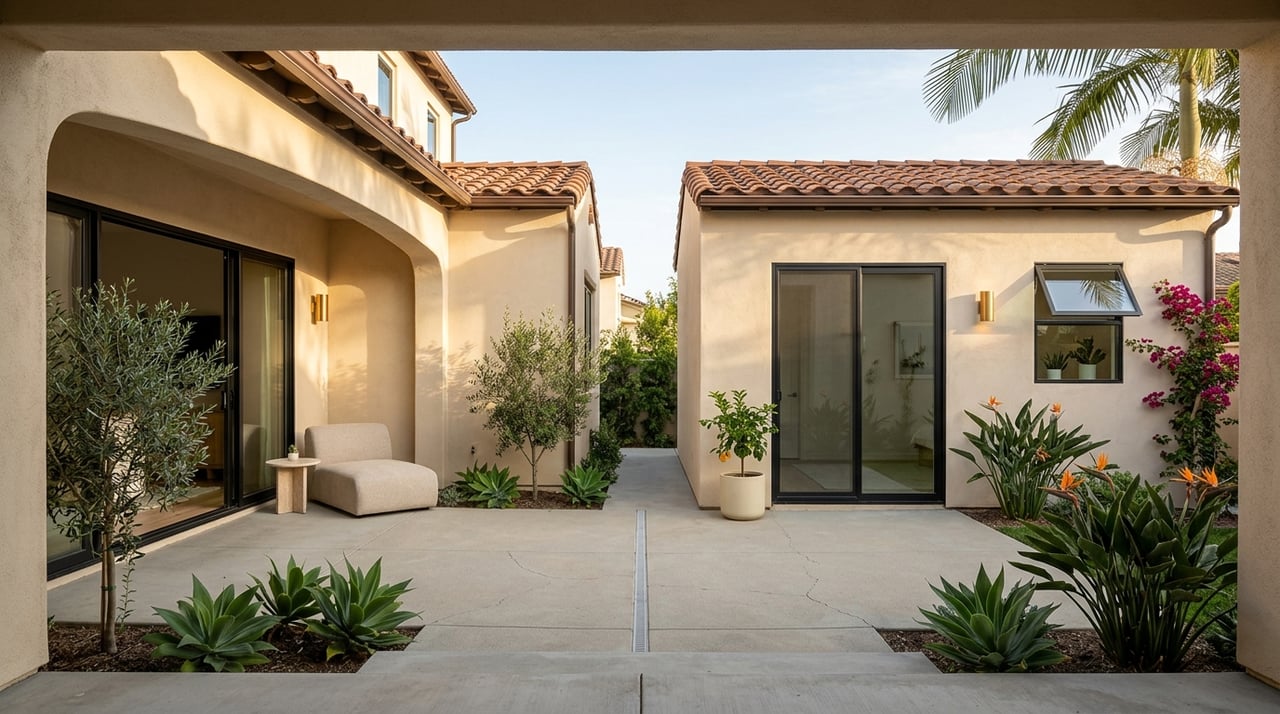
If you are trying to find a home that works for parents, kids, grandparents, or even future adult children, you already know the challenge is not just square footage. You need a layout that supports privacy, daily routines, and long-term flexibility without feeling like everyone is on top of each other. In Garden Grove, that kind of setup is not unusual, which is part of what makes the city stand out. Here is why Garden Grove can be a strong fit for multigenerational living and what you should watch for as you search.
Garden Grove fits larger households
Garden Grove is a compact Orange County city with about 172,331 residents and 50,286 households. The average household size is 3.4 people, which already points to a market where households often need more functional living space.
That pattern becomes even clearer when you look at household makeup. A SCAG local profile found that about 26% of households had five or more people in 2018, while about 15% were single-person households. For you as a buyer, that suggests larger and extended-family households are a normal part of the local housing picture, not an exception.
Garden Grove also has a 46.8% foreign-born population. That matters because many first-generation and bilingual households are balancing shared housing goals, family caregiving, and long-term wealth building at the same time.
Housing options support flexibility
One reason Garden Grove works for multigenerational living is its housing mix. Current Census Reporter data show about 62% of the city’s housing is in single-unit structures, and about 52% of units are owner-occupied.
SCAG also found that 65.5% of the housing stock was single-family and 63.6% was built before 1970. In practical terms, many homes were built in an older suburban pattern with yards, garages, and exterior space that may offer more flexibility than a newer, tighter site plan.
The city’s Land Use Element adds more context. It says the majority of Garden Grove housing is in Low Density Residential areas intended to preserve detached single-unit homes and ADUs. Low Medium Density areas can include single-family homes, ADUs, duplexes, triplexes, condos, and small-lot subdivisions, while Medium Density areas add apartments and townhomes.
That range gives you more than one path. You may find a traditional detached home with room to adapt, or you may decide a property in a different residential category offers the right balance of space and upkeep for your household.
ADUs make privacy easier
For many multigenerational buyers, the real question is not whether family can live together. It is whether everyone can live together comfortably. Garden Grove’s approach to accessory dwelling units, or ADUs, is one reason the city deserves attention.
The city’s ADU page explicitly says these units can help seniors age in place and allow extended families to live near one another while preserving privacy. That framing is important because it reflects a practical local use case, not just a theoretical one.
Garden Grove’s ADU Go program offers four pre-approved plans ranging from a 447-square-foot studio to a 1,000-square-foot three-bedroom unit. The city says the program is designed to reduce pre-construction costs, which may help if you are comparing a move-in-ready setup with a property you hope to improve over time.
Under Chapter 9.54, a single-family lot may have one ADU and or one JADU. A JADU must be inside the primary dwelling or an attached garage, cannot exceed 500 square feet, may share sanitation facilities, does not require extra parking, and requires owner occupancy. ADUs do not require owner occupancy.
Garden Grove also allows ADUs to be rented separately from the main home, though they may not be sold separately, and short-term rentals under 30 days are prohibited. For some households, that adds another layer of flexibility if your needs change later.
Lot features matter more than you think
Not every home in Garden Grove will work equally well for a multigenerational setup. When you tour properties, the lot itself can tell you a lot about future options.
Homes with wider side yards, deeper backyards, detached garages, and long driveways may be stronger candidates for multigenerational use. Those features line up with city ADU spacing and parking rules, which can affect what is realistically possible on a site.
For new ADUs, city rules generally require at least four-foot side and rear setbacks, six feet of separation from the primary home, and one off-street parking space. Parking may be placed in setback areas or tandem on a driveway, and in some transit-adjacent situations, parking is not required.
Detached ADUs are generally limited to 16 feet in height, with some 18-foot exceptions for certain multifamily or transit-adjacent lots. Those details may sound technical, but they can shape whether a property is truly a good fit for a second living area.
A smart buyer checklist for tours
If multigenerational living is part of your plan, it helps to tour homes with a clear checklist. Small site details can have a big impact later.
Here are some of the most useful things to verify:
- Side-yard width
- Rear-yard depth
- Detached structures
- Garage-conversion potential
- Separate entry options
- Driveway capacity
- Utility-meter location
- Permit history
These details matter because Garden Grove’s ADU rules hinge on setbacks, building separation, parking, and ministerial permit review. A home that looks promising from the street may not be as workable once you study the site.
There is also one important caveat. A March 2026 review from California’s Housing and Community Development department said Garden Grove still needed ordinance amendments to fully align with State ADU Law, so you should confirm the latest city requirements before moving forward with any ADU or JADU plan.
Multigenerational living is about daily life too
A property can check the box on bedroom count and still fall short if everyday routines feel hard. Multigenerational living works best when the surrounding city supports different ages and schedules.
Garden Grove offers the H. Louis Lake Senior Center, the Buena Clinton Youth and Family Center, and the Magnolia Park Family Resource Center. For households balancing elder support, youth programming, and family services, those city resources can add practical day-to-day value.
The local parks system also supports a wide range of needs. Amenities include Atlantis Play Center, Garden Grove Park, Magnolia Park, Village Green Park, and the Garden Grove Sports & Recreation Center, which offers youth leagues and drop-in sports.
There is also a central library resource at the OC Public Libraries Garden Grove Main branch at Euclid and Stanford, across from Garden Grove High School. For many families, library access is one of those small but steady quality-of-life benefits that gets used more than expected.
Transportation can help household routines
In a multigenerational household, transportation matters because not everyone has the same work hours, school schedule, or caregiving role. More mobility options can make a shared living setup run more smoothly.
According to OCTA, the OC Streetcar will connect Santa Ana and Garden Grove and link to the Santa Ana Regional Transportation Center and OC Bus routes. That added connection may become a useful option for households coordinating commuting, appointments, and errands across multiple generations.
Even if you still rely mostly on driving, transit access can make a difference when one household has several adults with different schedules. It is one more reason Garden Grove can support flexibility over time.
Gatherings are easier to plan
One overlooked part of multigenerational living is that celebrations, birthdays, and family meetings can quickly outgrow the house. Having nearby overflow options can make hosting less stressful.
Garden Grove’s Community Meeting Center and Courtyard Center offer resident-rate rentals, free on-site parking, patios, and kitchen facilities. If your household regularly gathers extended family, these kinds of local spaces can be a useful bonus.
Why Garden Grove stands out
Garden Grove works for multigenerational living because the city combines several factors that matter together. Larger households are already part of the local pattern, much of the housing stock reflects older suburban lot layouts, and the city has an ADU framework that can support privacy plus proximity.
It also helps that city materials are available in English, Vietnamese, Spanish, and Korean. For first-generation and bilingual households, that kind of accessibility can make the planning process feel more manageable.
If you are looking for a home that can support your family now and still adapt later, Garden Grove deserves a closer look. The best opportunities often come from knowing how to read the lot, the layout, and the long-term potential, not just the listing photos.
If you want help finding a Garden Grove property that fits your household today and gives you options for tomorrow, Elizabeth Sanchez is here to help.
FAQs
Why is Garden Grove a good city for multigenerational living?
- Garden Grove has a notable share of larger households, a housing stock with many single-family homes, and local ADU policies that can support privacy and flexible living arrangements.
What types of Garden Grove homes may work best for extended family living?
- Homes with wider side yards, deeper backyards, detached garages, long driveways, and separate entry possibilities may offer stronger multigenerational potential.
What should you check before buying a Garden Grove home for an ADU?
- You should verify setbacks, building separation, parking options, driveway space, utility locations, detached structures, garage-conversion potential, permit history, and the latest city ADU requirements.
How do Garden Grove ADUs support family living?
- The city states that ADUs can help seniors age in place and allow extended families to live near one another while preserving privacy.
Are Garden Grove city services helpful for multigenerational households?
- Yes, the city offers resources like a senior center, youth and family services, parks, recreation facilities, library access, and community event spaces that can support different age groups in one household.